
Serving Cook County & DuPage County
Construction Accident Lawyer Peter Wachowski
Peter Wachowski is a Chicago construction accident lawyer helping injured workers in Cook and DuPage County secure fair compensation and reduce pressure from insurance and medical bills.
Contact Peter Wachowski about your construction accident today.
- 30+ Years Experience
- $36M+ Recovered
Compassionate Legal Advocacy after Construction Accidents
Peter Wachowski is a Chicago-based accident attorney with years of experience protecting injured workers and helping them to secure accountability.
Consider:
- What qualifies as a construction accident under Illinois law
- Why timing and investigation matter
- Common mistakes that reduce compensation
* How a trusted attorney protects injured workers across the region
Call 866-699-3339 for a free, confidential consultation
Core Issues
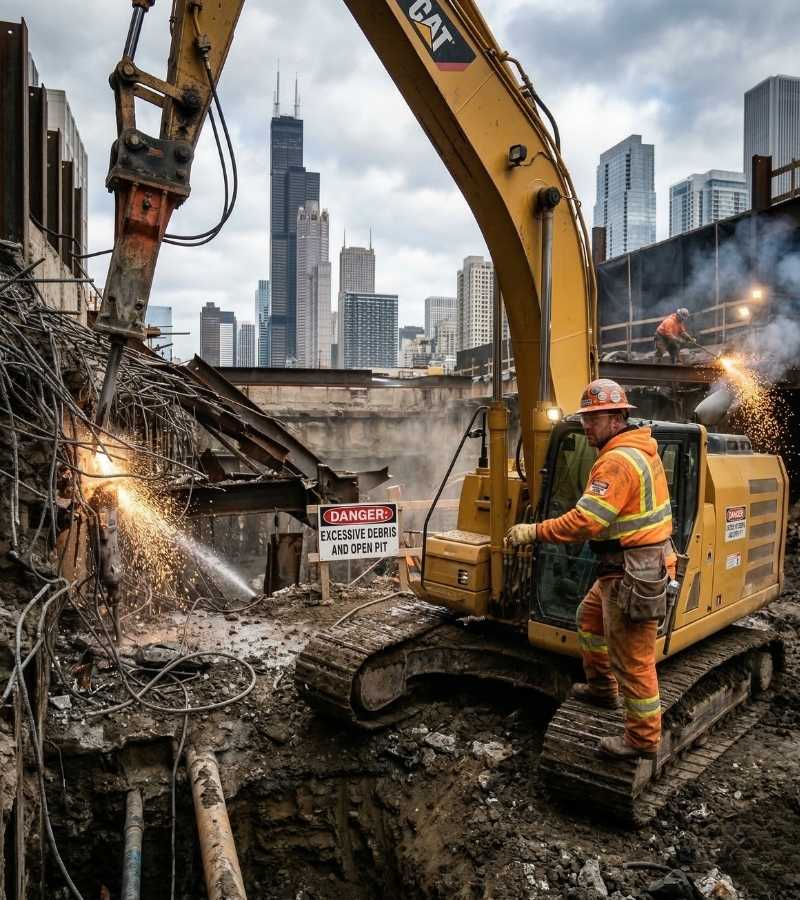
Construction Accidents Create Immediate Financial Risk
Construction sites are inherently dangerous. Falls from height, heavy machinery, electrical exposure, and unstable structures can cause life-altering injuries in seconds. After an accident, injured workers often face medical bills, missed paychecks, and uncertainty — while insurers move quickly to limit payouts.
For workers commuting into Chicago or working on projects throughout Cook and DuPage Counties, the legal complexity increases. Multiple contractors, shifting job sites, and overlapping insurance policies make construction accident claims uniquely challenging.
This page helps you understand how to protect yourself legally and financially after a construction injury — and when workers’ compensation alone is not enough.
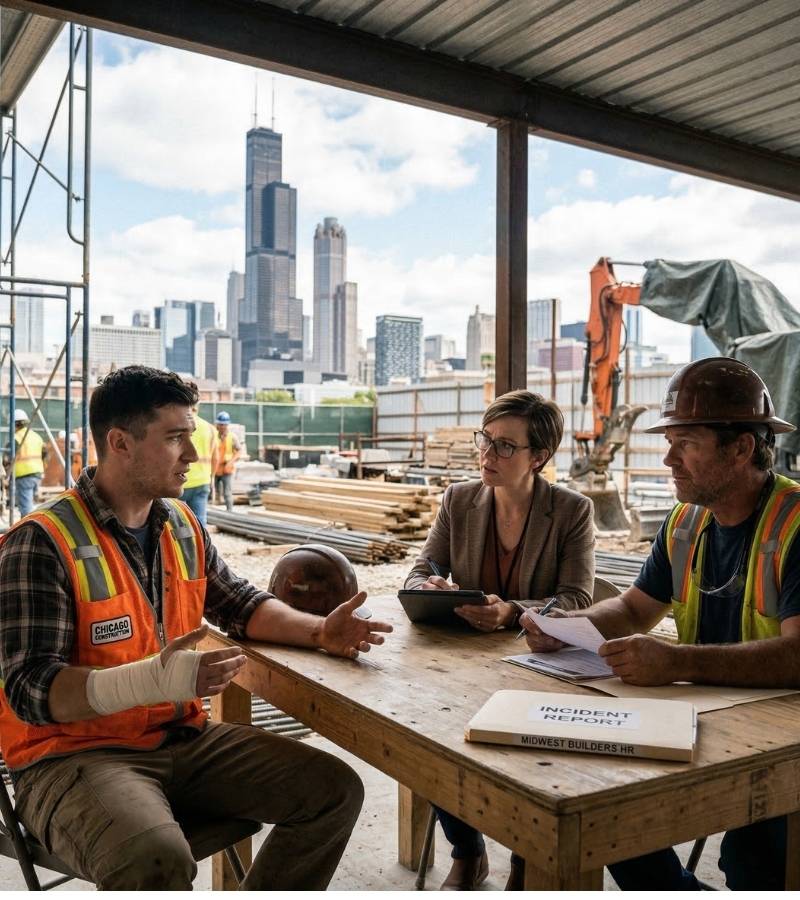
What Is a Construction Accident Under Illinois Law?
A construction accident is an injury that occurs on or near a construction site while performing job-related duties.
Under Illinois law, these accidents may give rise to:
- Workers’ compensation claims
- Third-party personal injury claims
- Or both
Construction accident cases differ from general workplace injuries because they often involve multiple responsible parties, including general contractors, subcontractors, property owners, and equipment manufacturers.
In areas like Addison and Bensenville, where industrial construction and logistics projects are common, liability often extends beyond the direct employer. Identifying these additional parties can significantly increase available compensation.
Why Construction Accident Claims Matter in Cook & DuPage County
Construction accidents frequently result in catastrophic injuries — traumatic brain injuries, spinal damage, crush injuries, and amputations — with lifelong consequences.
In Cook & DuPage County, common challenges include:
- Workers’ compensation benefits that fall short of total losses
- Insurance carriers disputing injury severity
- Contractors shifting responsibility
- Rapid job-site changes that erase evidence
On active projects in places like Downers Grove and Elmhurst, evidence can disappear within days as sites evolve. Early legal involvement is critical to protect your claim.
A trusted attorney intervenes quickly to secure accident reports, witness statements, OSHA records, and contractor agreements before insurers control the narrative.
What to Look for in Legal Assistance
When evaluating legal assistance for workplace accident cases, the process should begin with a thorough and strategic case review. A trusted attorney will complete a detailed intake and questionnaire, carefully assess the strength of the claim, identify opportunities for financial recovery, and explain practical steps to help you remain financially stable during the process. This includes addressing concerns about medical bills, credit impact, court procedures, and even language barriers so clients feel informed and protected from the outset.
Strong legal representation also requires an organized and efficient case initiation system. A structured docketing and workflow process ensures deadlines are met, documents are properly tracked, and clients have access to important case information throughout the litigation — and even after the matter concludes. Beyond filing paperwork, the right legal team proactively protects clients from aggressive collection activity, working to safeguard credit ratings while the claim is pending.
Finally, meaningful representation focuses on maximizing financial recovery. This includes pursuing strategic lien reductions to decrease or eliminate medical and insurance claims against the settlement, thereby increasing the client’s net recovery. It also means doing the extra legal work necessary to strengthen the case, negotiate from a position of leverage, and ensure that all fees, liens, and obligations are properly resolved before the case is formally closed — providing clients with clarity, closure, and true financial advantage.

Local Areas Served
Peter Wachowski serves Chicago and nearby suburbs and communities throughout cook & DuPage Counties.
- Park Ridge
- Arlington Heights
- Mt Prospect
- Schaumburg
- Naperville
Local, accessible, and personal — schedule your consultation today.

About Peter Wachowski
Peter Wachowski is a trusted local attorney with deep roots in the Polish-American community. Fluent in Polish (Mówimy po polsku), Peter serves hardworking families who value trust, clarity, and personal advocacy—ensuring every client is heard and respected.
He has more than 30 years of experience and over $36 million recovered for injured clients. Known for integrity, clarity, and client advocacy, he provides personal representation and not case-factory processing.
Protect Your Stability Before Insurers Act
Workplace injuries create immediate financial and legal risk — but you don’t have to face insurers alone.
Peter Wachowski provides calm, experienced protection designed to secure:
Income continuity
Medical access
Long-term financial security
Frequently Asked Questions
Do I need a lawyer after a construction accident?
Yes. Construction accident cases are often more complex than typical workplace injuries. For employees, while workers’ compensation may cover basic medical expenses and a portion of lost wages, many construction accidents involve additional legal issues such as unsafe equipment, negligent subcontractors, defective machinery, or unsafe jobsite conditions. A lawyer can investigate who is legally responsible, determine whether third-party claims are possible, gather evidence, and make sure your rights are protected. Legal representation also helps ensure you pursue the maximum compensation available rather than relying only on workers’ compensation benefits.
Can I sue if I receive workers’ compensation?
Yes, in certain circumstances. Workers’ compensation generally prevents you from suing your direct employer, but it does not stop you from filing a lawsuit against a third party that contributed to your injury. For example, if a subcontractor created a dangerous condition, a property owner failed to maintain a safe site, or defective equipment caused the accident, you may have grounds for a separate personal injury claim. These third-party claims can allow injured workers to recover additional damages such as full lost wages, pain and suffering, and other losses not covered by workers’ compensation.
How soon should I contact a lawyer?
Immediately. The hours and days following a construction accident are critical for protecting your legal rights. Evidence at construction sites can change quickly—equipment may be repaired, conditions may be altered, and witness memories can fade. Contacting a lawyer early allows them to secure evidence, obtain accident reports, interview witnesses, and ensure important deadlines are met. Early legal guidance also helps protect your workers’ compensation benefits and prevents costly mistakes when dealing with insurers or employers.
What types of compensation can I recover after a construction accident?
Compensation depends on the type of claim you pursue. Workers’ compensation typically covers medical treatment, rehabilitation costs, and a portion of lost wages while you recover. However, if a third-party claim is available, you may also pursue additional damages such as full lost income, reduced future earning capacity, pain and suffering, and compensation for permanent disability or disfigurement. In fatal accidents, surviving family members may also pursue wrongful death damages, which can include funeral expenses and loss of financial support.
What if my employer or insurance company denies my claim?
A denial does not necessarily mean the case is over. Workers’ compensation claims are frequently denied for reasons such as incomplete paperwork, disputes about how the accident occurred, or allegations that the injury was not work-related. An experienced attorney can review the denial, gather supporting medical and workplace evidence, and file an appeal if necessary. They can also evaluate whether additional claims—such as third-party negligence or product liability—should be pursued to recover the compensation you deserve.
As a subcontractor, can I file a workers' compensation claim with my employer?
Subcontractors are typically responsible for their workers' compensation insurance, although they may be compensated by the hiring firm if they are uninsured, underfunded, or misclassified as independent contractors when they truly work as employees. Misclassification or a lack of coverage frequently leaves the hiring business liable for damage. Legal guidance can assist in determining coverage rights based on the specific job connection.