Why Scott’s Law Exists and Who It Is Named After
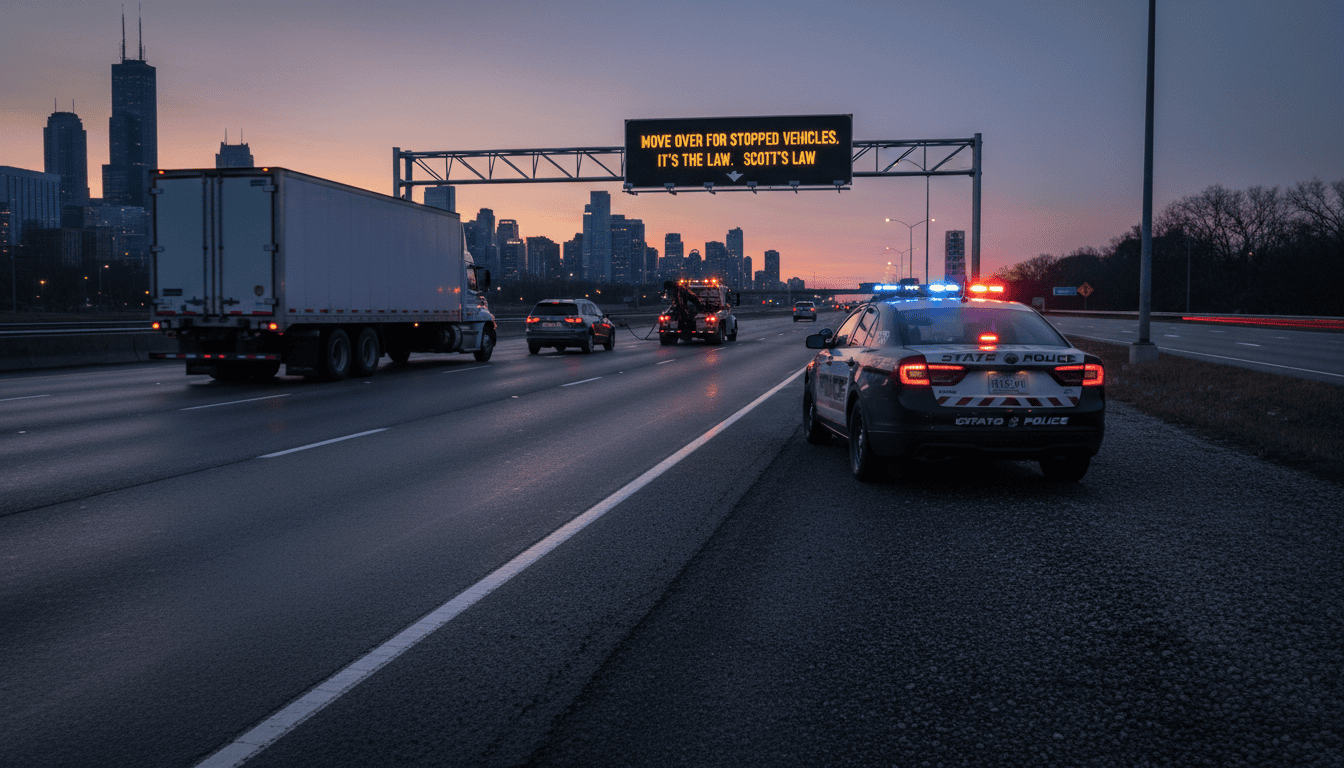
Scott’s Law in Illinois is named after a person named Scott who was killed in the line of duty. It is known in many other states as the Move Over Law, and while the name changes from state to state, the purpose stays the same. When a driver sees a police vehicle, an emergency vehicle, or any official government vehicle with its lights activated on the side of the road, the law requires that driver to change lanes to move away from that vehicle, creating a safer buffer so the people working roadside are not struck by passing traffic.
This law was written specifically because roadside stops are dangerous. First responders and government workers are exposed to fast moving traffic every time they step out of their vehicle, and a driver who fails to move over can turn a routine stop into a tragedy.
What Should I Do If I Cannot Safely Move Over in Heavy Traffic?
A common and reasonable question is what happens when traffic is too heavy to change lanes. The law accounts for this. Scott’s Law does not require an impossible maneuver. Instead, it requires drivers to do what is reasonably possible to create a safer situation.
- If you can safely change lanes away from the stopped vehicle, do so.
- If changing lanes is not possible because of traffic conditions, slow your vehicle down.
- Continue watching the roadside vehicle and any workers or officers near it as you pass.
- Avoid sudden lane changes that could create a new hazard for other drivers.
- Resume normal speed only once you have fully passed the stopped vehicle.
The goal of the law is not to force a specific action regardless of circumstances. It is to require drivers to actively reduce risk, whether that means moving over or slowing down.
Does Scott’s Law Only Apply to Police Cars and Emergency Vehicles?
Many drivers assume Scott’s Law only protects police officers, EMS crews, or other official vehicles. That assumption is incorrect. Illinois law is written broadly. If any vehicle is on the side of the road with its lights flashing, that is the triggering detail, not who owns the vehicle or what job the driver has. Once those lights are flashing, drivers on the road are required to either change lanes safely or slow down to create a safer environment.
This means Scott’s Law can apply to a stranded motorist with hazard lights on, a tow truck operator, a utility worker, or any other vehicle signaling that it is stopped or disabled on the shoulder. Understanding this broader scope matters both for staying compliant with the law and for understanding liability if a roadside collision occurs.
If you were injured in a roadside crash and believe Scott’s Law may apply to your case, call 866-699-3339 or fill out the form at the bottom of the page.
What Are My Legal Rights After a Scott’s Law Violation in Cook County and DuPage County?
If you were injured because another driver failed to move over or slow down near a stopped vehicle in Chicago, Cook County, or DuPage County, you may have the right to pursue compensation for medical expenses, lost wages, and pain and suffering. A violation of Scott’s Law can serve as strong evidence that the other driver failed to exercise reasonable care, which can directly support a personal injury claim.
These cases often move quickly from a traffic citation into a broader liability discussion once injuries are involved. Our roadway accident lawyer team regularly evaluates how traffic law violations, including Scott’s Law, connect to civil liability for injured victims.
What Evidence Matters Most in a Scott’s Law Injury Case?
Because these cases often hinge on whether a driver had a safe opportunity to move over or slow down, specific evidence becomes especially important.
| Evidence Type | Why It Matters |
|---|---|
| Police or incident report | Documents whether a citation was issued for failing to move over |
| Traffic camera or dash cam footage | Shows traffic conditions and whether moving over was possible |
| Witness statements | Confirm the flow of traffic and driver behavior at the time |
| Vehicle damage photos | Help establish the point and angle of impact |
| Medical records | Connect the collision directly to the injuries sustained |
Because traffic conditions are often central to these cases, evidence showing how much room was actually available to the other driver can make a significant difference in how liability is determined.
What Mistakes Should Drivers and Injured Victims Avoid in These Cases?
Several avoidable mistakes tend to complicate Scott’s Law related injury claims.
- Assuming the law only applies to police or emergency vehicles
- Failing to document traffic conditions at the time of the crash
- Speaking with an insurance adjuster before understanding how a traffic citation affects the claim
- Not obtaining a copy of the police report promptly
- Underestimating injuries that seem minor immediately after impact
How Long Does a Scott’s Law Injury Claim Take to Resolve?
There is no fixed timeline for these claims, and no responsible attorney should promise one. When a citation was issued and the facts are well documented, some claims move relatively efficiently. Others take longer, particularly when liability is disputed or when injuries require extended treatment before the full extent of damages becomes clear.
At Wachowski Law Firm, clients dealing with the aftermath of a roadside collision are supported through The Total Guard Approach®, which is designed to protect clients during the vulnerable period after an injury, including credit protection and lien reduction. You can learn more on our Total Guard Approach page.
Protecting Yourself and Others Under Scott’s Law
Scott’s Law exists to protect anyone stopped safely on the shoulder with their lights flashing, not just police officers and emergency responders. Whether you were injured because another driver failed to move over, or you are trying to understand how this law applies to your situation, having clear answers matters. If you were hurt in a roadside collision in Chicago, Cook County, or DuPage County, call 866-699-3339 or fill out the form at the bottom of the page.