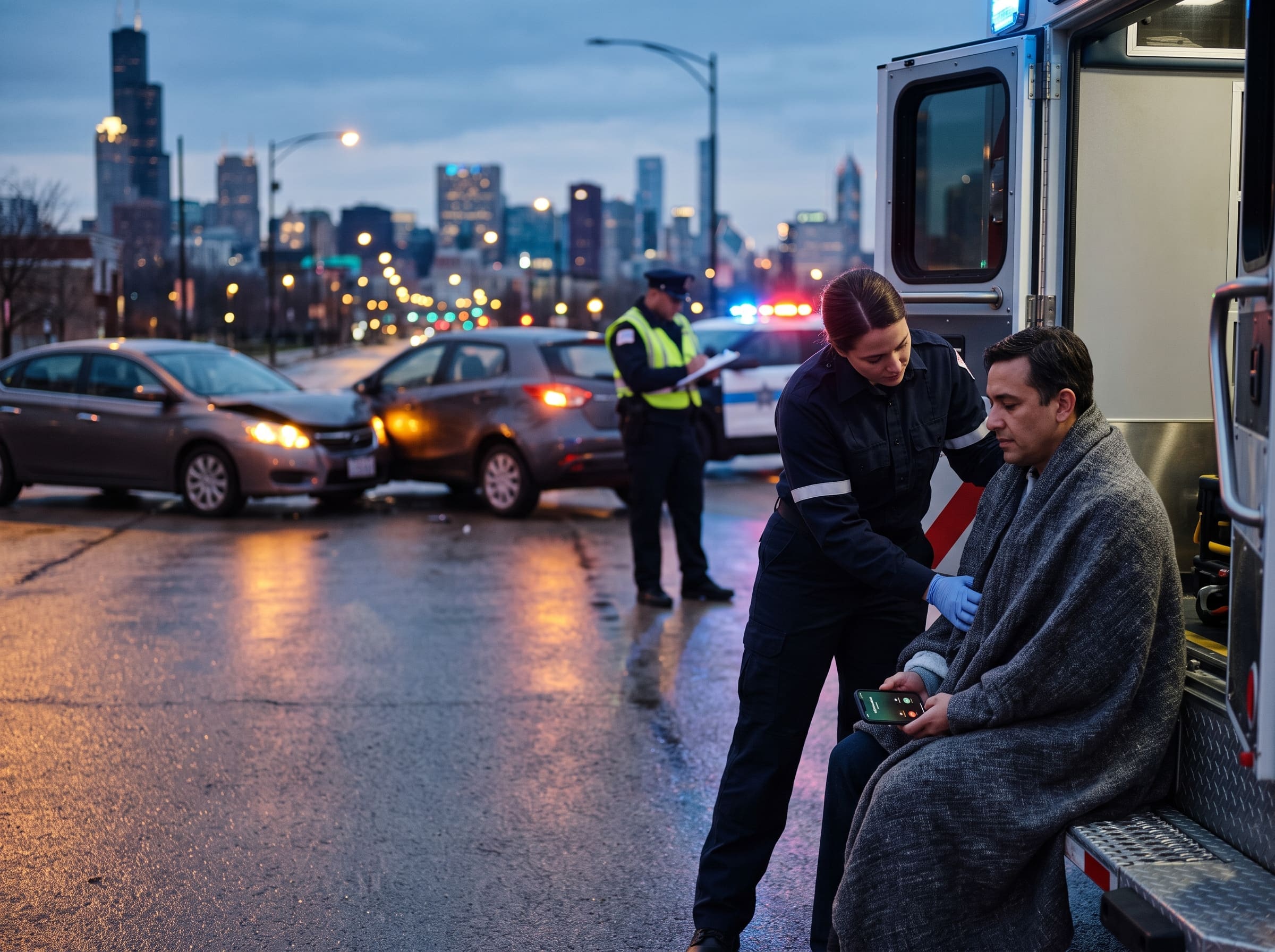

When an adjuster says, “We accept liability,” they are saying their insured driver was at fault for the crash. They are not agreeing that you were seriously hurt, and they are not promising a fair payment for your injuries. Fault and value are two separate questions, and the second one is where many injured people get shortchanged.
If you were hurt in a crash in Chicago, Cook County, or DuPage County, understanding both can help you avoid a low offer.
What Does “We Accept Liability” Actually Mean After a Car Accident?
Say you were stopped at a red light and another driver rear-ended you. An adjuster who accepts liability is telling you the insurer agrees you had no fault in the accident.
That is a meaningful step, but it covers only one part of your claim. What the statement does not mean is often more important than what it does mean.
| What Accepting Liability Means | What It Does Not Mean |
|---|---|
| The insurer agrees its driver caused the crash | The insurer agrees you were seriously hurt |
| You are not being blamed for the accident | The insurer agrees to the value of your case |
| Fault is no longer the main dispute | The insurer will pay a fair amount for your injuries |
Why Accepting Liability Is Not the Same as a Fair Settlement Offer
Once fault is settled, the insurer’s focus turns to the second question: how little can it pay? An adjuster may sound cooperative while still offering a number that does not reflect your medical treatment, lasting symptoms, or time away from normal life.
Hearing “we accept liability” can create a false sense of security. It may lead you to believe the claim is nearly resolved, when the most important negotiation has not started. Our car accident lawyer page explains how we approach both parts of a claim.
How Do Insurance Companies Figure Out What a Car Accident Claim Is Worth?
Claim valuation is not done by guesswork. Many insurance companies subscribe to a computerized evaluation system called Colossus. The system takes many details into account and uses them to help generate a value for your claim.
The factors an insurer may look at include:
- The zip code where the accident happened.
- The type of accident, such as a rear-end collision or an intersection crash.
- The attorney handling the claim, including whether that attorney files lawsuits or tries to settle everything, and whether that attorney goes to trial or rarely sees a courtroom.
- Permanency, including whether there were broken bones or lasting injuries.
- How soon you saw a doctor or sought medical treatment after the crash.
- Whether you were taken away by ambulance.
- How much property damage the vehicles sustained.
How Your Location, Your Attorney, and Your Early Medical Care Can Shape an Offer
Several of these factors are in your hands within the first hours and days after a crash. Taking the ambulance ride and seeking prompt medical care create a record that supports your injuries. Delays can leave room for an insurer to argue the injury was minor. We cover this in more detail in our guide to the first 24 hours after a car accident.
The attorney factor also matters. An insurer may evaluate a claim differently depending on whether the lawyer on the other side is prepared to file suit and take a case to court. That is one reason who represents you can influence the conversation, even before negotiations begin.
What Should You Do Right Now If an Adjuster Says They Accept Liability?
- Do not treat an acceptance of liability as an agreement on the value of your case.
- Keep following your doctor’s treatment plan and attend every appointment.
- Decline any request for a recorded statement until you have spoken with an attorney.
- Save every medical record, bill, and piece of correspondence from the insurer.
- Do not accept or sign anything until you understand the full extent of your injuries.
Call 866-699-3339 or fill out the form at the bottom of the page.
What Are Your Legal Rights After a Car Accident in Cook County?
If another driver’s negligence caused your crash, you may be entitled to pursue compensation for your injuries and related losses. That includes the right to:
- Consult a personal injury attorney before responding to any settlement offer.
- Decline to give a recorded statement to the other driver’s insurer.
- Follow your own medical providers’ advice about treatment.
- Take the time you need to understand your injuries before accepting an offer.
Illinois law includes deadlines and fault rules that can affect your claim, so confirm the details that apply to you with an attorney. You can learn more on our Cook County and DuPage County service pages.
What Evidence Helps Prove the Value of a Personal Injury Claim?
Because insurers weigh specific details, the documentation behind your claim matters. Useful evidence includes:
- Ambulance and emergency room records showing prompt care.
- Follow-up medical records, imaging, and bills.
- Documentation of any broken bones or lasting limitations.
- Photos of vehicle damage and the crash scene.
- The police report and witness contact information.
- Notes on pain, missed work, and daily activities as your recovery unfolds.
What Common Mistakes Lead to a Lower Car Accident Settlement?
- Assuming that accepted liability means a fair payment is coming.
- Skipping the ambulance or waiting to seek medical care.
- Giving a recorded statement without preparation.
- Accepting an early offer before the full scope of your injuries is known.
- Overlooking how property damage, injury type, and treatment timing are weighed by insurers.
- Handling negotiations alone when the insurer is using a computerized valuation system.
How Long Does It Take to Settle a Personal Injury Claim?
There is no guaranteed timeline. The length of a case depends on how long your treatment lasts, how the insurer evaluates the claim, and whether the case settles or must be filed in court. Settling too early can mean accepting an offer before your injuries are fully understood, so patience is often part of a sound strategy.
How The Total Guard Approach® Protects You While Your Claim Is Evaluated
At Wachowski Law Firm, The Total Guard Approach® is designed to protect clients during the vulnerable period after an injury. It includes credit protection and lien reduction, so financial pressure does not push you toward a low settlement. You can read more about it on our Total Guard Approach page or learn about our personal injury practice.
If you are ready to talk, you can also use our personal injury case help form or visit our contact page.
Call 866-699-3339 or fill out the form at the bottom of the page.